

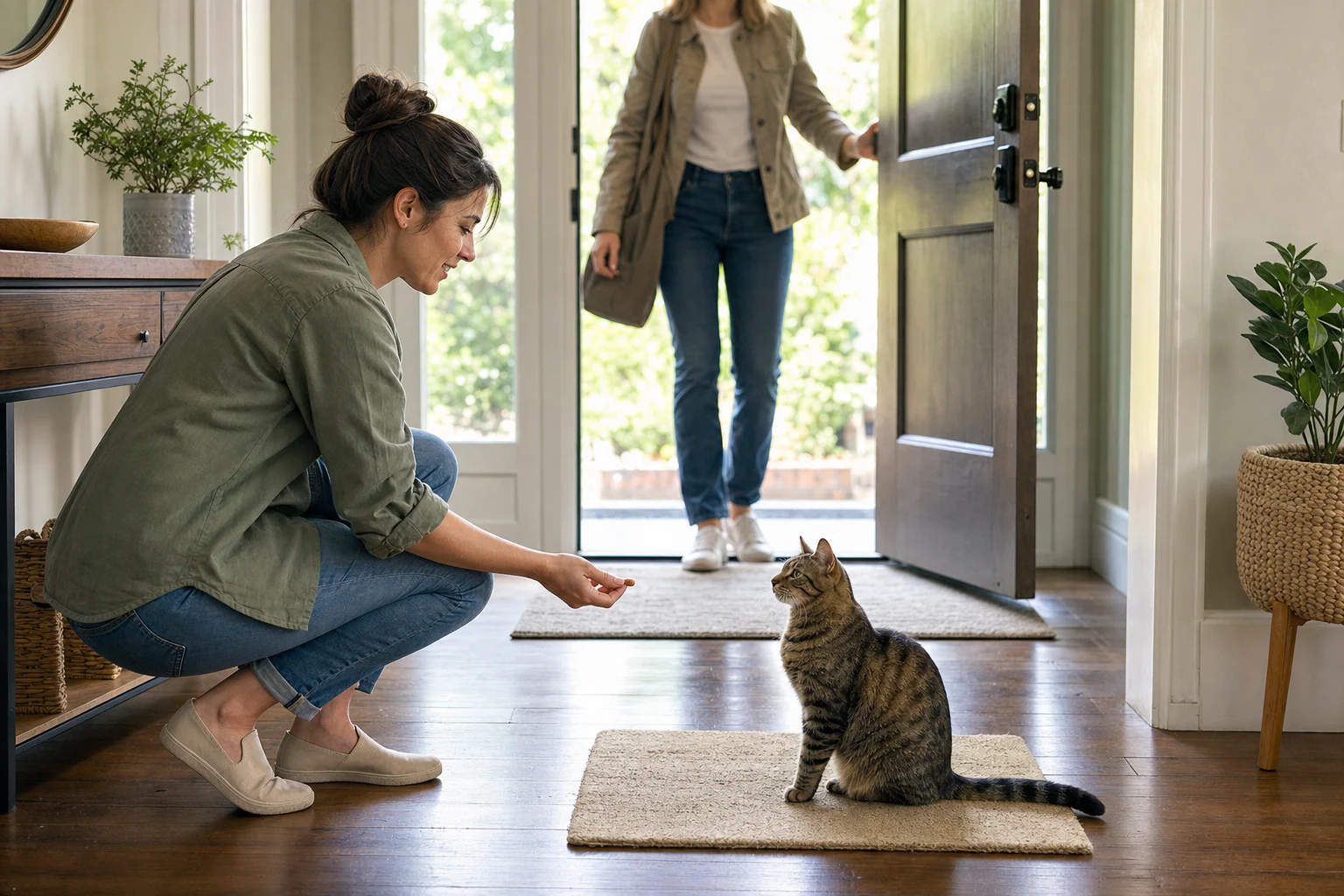
Every cat owner knows the heart-stopping panic that accompanies a sudden flash of fur darting between their ankles just as the front door swings open. In a fraction of a second, an ordinary arrival home with an armful of groceries turns into an adrenaline-fueled chase across the front lawn. If your cat treats every turn of the doorknob as an invitation to stage a high-stakes prison break, you are not dealing with an ungrateful companion. You are dealing with an animal responding to deep-seated instincts of curiosity, territory, and opportunistic hunting.
Door dashing is one of the most hazardous behaviors an indoor feline can develop. Beyond the immediate danger of busy roadways, an escaped indoor cat faces territorial neighborhood strays, toxic garden plants, parasites, and predators. Resolving this habit requires more than quick reflexes. You must alter the environmental landscape, dismantle the behavioral triggers driving the escape, and systematically teach your cat that the most rewarding place in the house is anywhere but the front threshold.
Why the Front Door Becomes an Obsession
To break the habit, you have to understand the powerful sensory contrast that exists on either side of your entryway. Even in the most loving home, indoor life is relatively predictable. The temperature remains constant, the furniture stays in place, and the smells are familiar.
The outdoor world, by contrast, is an intoxicating sensory buffet. A single crack of an exterior door releases a blast of moving air loaded with the scent of damp earth, passing rodents, neighborhood cats, and blooming vegetation. For a predator equipped with roughly two hundred million olfactory receptors, that sensory rush is an overwhelming invitation to explore.
Furthermore, door dashing is frequently reinforced by the inadvertent theater humans create. When a cat bolts, owners yell, gasp, drop their bags, and sprint after them. To a bored cat, this dramatic reaction can feel like an exhilarating game of tag. Even when the experience ends with the cat being scooped up and scolded, the massive spike in excitement often acts as positive reinforcement. A dull afternoon suddenly becomes thrilling, and the front door cements itself as the epicenter of household action.
Setting Up Environmental Safeguards and Buffers
Training takes time to take root, but an escape can happen this afternoon. Before you can modify your cat’s choices, you must implement immediate physical safeguards to eliminate accidental successes. Every single escape reinforces the behavior, resetting your training clock back to zero.
Creating an Entryway Airlock
The most foolproof way to stop an escape artist is to create a physical buffer zone between the living quarters and the outside world. If your home layout features an enclosed foyer, mudroom, or storm door, use it to establish a two-door protocol. Never open the exterior door until the interior door behind you is fully latched.
For open-concept floor plans lacking a natural entryway vestibule, tall, freestanding pet gates with vertical slats can be installed across a hallway leading to the exit. While athletic adult cats can scale standard gates, extra-tall mesh barrier gates designed for hallways create enough hesitation to allow you to enter and exit safely.
Modifying the Threshold Environment
Cats are meticulous about where they place their paws. You can make the immediate zone around the front door distinctly uncomfortable to loiter in without causing pain or lasting distress.
-
Tactile deterrents: Lay down double-sided sticky tape or a clear vinyl floor runner with the textured carpet-gripper nubs facing upward directly in front of the door. Cats dislike stepping on irregular or sticky surfaces and will naturally choose to sit several feet back on plush carpet or hardwood.
-
Scent deterrents: Lightly spritz the bottom of the door frame with scents felines naturally avoid, such as diluted citrus or bitter apple spray. Avoid harsh essential oils that are toxic to cats, opting instead for pet-safe commercial boundary sprays.
-
Visual barriers: If your front door features sidelight windows or glass panels near the floor, cover them with frosted static-cling window film. If your cat cannot watch birds, lizards, and moving shadows on the front porch, the emotional urge to reach the other side drops dramatically.
Transforming the Door into a Non-Event
Many cats begin preparing for their escape long before the door ever opens. They learn the subtle sequence of cues signaling an exit: the jingle of car keys, the rustle of a heavy winter coat, or the clicking sound of a deadbolt turning. By the time your hand touches the knob, your cat is already coiled like a spring.
You must systematically break this predictive chain through desensitization. Several times an evening, pick up your keys, walk to the door, jingle them, and then sit right back down on the sofa. Turn the deadbolt, pause for five seconds, lock it again, and walk into the kitchen.
When you strip these auditory cues of their meaning, your cat stops treating them as a starter pistol. The front door shifts from an active launch pad into an uninteresting piece of household hardware.
Practical Training: Establishing an Alternative Target
A fundamental rule of animal behavior is that you cannot simply train an absence of behavior; you must replace the unwanted action with a specific, rewarding alternative. Instead of teaching your cat not to bolt, teach them that their job when the door opens is to run to a designated perch.
Teaching a High-Perch Station
Cats naturally feel more confident and secure when looking down from an elevated position. Capitalize on this instinct by setting up a tall cat tree, a mounted wall perch, or a sturdy console table eight to ten feet away from the front door, well outside the dash zone.
-
Choose an unmistakable audio cue, such as a training clicker, a distinct two-tone whistle, or a specific phrase like “Go to perch.”
-
Lure your cat to the elevated station using a high-value treat they never receive at mealtime, such as freeze-dried salmon or a dab of squeeze-tube puree.
-
The instant all four paws hit the platform, sound your clicker or verbal marker and deliver the reward.
-
Practice this daily until your cat sprints to the perch the moment they hear the cue, anticipating the treat.
-
Gradually pair this with door mechanics. Have a family member gently touch the doorknob, cue the cat to their perch, reward them generously for staying seated, and only then open the door an inch. If the cat breaks position, the door immediately closes, and the exercise resets.
Over consistent repetitions, your cat builds a new mental map: the sound of the door opening no longer means “run outside”—it means sprint to the perch for an extraordinary meal.
The Redirected Toss Technique
If you live alone and are working through the early phases of stationing, you can use the proactive treat-scatter method for departures and arrivals.
Keep a sealed jar of crunchy cat treats on a shelf outside your front door and another just inside the entryway. When leaving, do not try to nudge your cat backward with your shins. Instead, open the door just enough to slide your hand inside, toss a small handful of treats across the room toward the kitchen, and step out while their back is turned.
When arriving home, open the door a mere crack, toss a treat cluster deep into the house, and walk inside as your cat pursues the rolling food. You are taking advantage of their natural predatory drive, directing that forward energy away from the exterior opening.
Eliminating the Root Cause: Indoor Understimulation
A cat that is completely satisfied with their indoor territory rarely feels a frantic need to escape it. Chronic door dashing is frequently a symptom of environmental understimulation. If an animal spends sixteen waking hours staring at blank drywall, the wild unpredictability of the front yard becomes an irresistible siren call.
Daily Predatory Play Cycles
To keep a cat content indoors, you must satisfy their evolutionary need to complete the predatory cycle: stalk, chase, pounce, catch, and eat.
Dedicate ten to fifteen minutes twice a day to interactive play using a wand toy with feathers or a fabric strip. Move the toy like real prey, having it hide behind couch cushions, dart across rugs, and freeze unexpectedly. Allow your cat to successfully capture the toy at the end of the session, and immediately follow the game with a meal or a hearty protein snack. This triggers the physiological satisfaction of a successful hunt, flooding their system with relaxation hormones and encouraging deep, contented sleep rather than restless boundary-patrolling.
Safe Outlets for Outdoor Instincts
If your cat continues to display an intense fascination with the outdoors, provide that experience on safe, strictly controlled terms.
-
Window bird feeders: Mount clear plastic bird feeders directly to the exterior glass of a rear window and place a wide, cushioned sill inside. This provides hours of vivid visual enrichment that expends mental energy.
-
Enclosed catios: If you have a patio, balcony, or backyard space, install a fully enclosed outdoor structure connected to your house via a pet door insert. This allows your cat to enjoy fresh air, sunbeams, and passing insects without exposing them to outside hazards.
-
Harness training done correctly: If you decide to walk your cat on a harness and leash, never let them walk across the exterior threshold on their own paws. Allowing a cat to step over the front door sill while walking on a leash completely blurs the boundary you are trying to establish. Always place your cat inside a carrier or carry them securely in your arms past the doorway, only setting them down once you reach the grass or patio. This reinforces that the threshold itself is strictly off-limits to unassisted paws.
Emergency Management: What to Do When a Dash Happens
Even with careful management, an unexpected distraction like an emergency, a visiting repair technician, or an awkward delivery box can lead to an accidental escape. How you react in the first sixty seconds determines whether your cat stays close or bolts into hiding.
Never scream, run directly toward the cat, or flail your arms. To a startled cat, a sprinting human looks like an apex predator intent on attacking them. That sight can trigger a blind panic response, sending the cat sprinting across a road, squeezing under a neighbor’s locked gate, or scrambling up a high tree.
Instead, freeze immediately. Turn your body sideways so your profile looks less imposing, lower yourself to a crouch, and avoid direct, unblinking eye contact. Speak in soft, conversational tones. If you have a treat bag nearby, shake it gently while staying low to the ground.
If the cat hesitates or looks back, toss a treat halfway between you and them, gradually coaxing them closer. If you must approach, do so at a slow, diagonal walk rather than a direct line, gently extending a familiar object or an open hand.
Finally, ensure your safety nets are permanently in place. Keep your cat microchipped with up-to-date contact information registered with the recovery database, and outfit them with a breakaway collar featuring an identification tag. A few simple layers of prevention ensure that even if an escape occurs, it remains a momentary scare rather than a permanent heartbreak.
Meta Title: How to Stop a Cat from Door Dashing: Proven Solutions
Meta Description: Tired of your cat darting out the front door? Learn practical threshold training, environmental buffers, and enrichment strategies to keep your feline safe inside.
