

Rabbits are among the most lovable and gentle pets, admired for their soft fur, playful nature, and affectionate personalities. Many people choose rabbits as companions because they are quiet, clean, and capable of forming strong emotional bonds with their owners. However, despite their cute appearance, rabbits require dedicated care, proper grooming, and a well-planned environment to stay healthy and happy.
Unlike common household pets such as cats and dogs, rabbits have unique physical, emotional, and dietary needs. They are sensitive animals that can become stressed, ill, or depressed if their requirements are not met. This guide explains how to care for your pet rabbit, including housing, grooming, feeding, health care, and emotional well-being, in a practical and modern way.
Understanding your rabbit’s nature and behaviour
Rabbits are intelligent, social, and curious animals. In the wild, they live in groups and rely on companionship for safety and comfort. Because of this, pet rabbits also crave interaction and emotional connection.
They enjoy human company and often develop close relationships with their owners. Many rabbits recognise their caregivers, respond to their voices, and even follow them around the home. When treated with kindness and consistency, rabbits become affectionate and trusting pets.
Rabbits are most active in the early morning and evening. During the day, they often rest, and that is normal. Do not assume your rabbit is bored simply because it naps often. What matters is whether it is alert, eating well, grooming itself, and moving comfortably when awake.
If your family is away most of the day, your rabbit may feel lonely, especially if it is kept alone. Many owners choose to keep rabbits in bonded pairs to reduce loneliness, but bonding must be done carefully and slowly. If you keep a single rabbit, make it a habit to spend quality time with it daily through gentle handling, floor time, and interactive play.
Safe housing and a calm environment
A rabbit’s living space affects its health directly. Many people still keep rabbits in small cages, but modern rabbit care encourages a larger, more comfortable setup. A rabbit needs enough room to stretch fully, stand on its hind legs, hop a few steps, and access food, water, and a litter area without feeling cramped.
A good setup can be a large indoor pen, a spacious rabbit cage with an attached exercise area, or a rabbit-proofed room. Your rabbit should have a quiet corner where it can rest without being disturbed. Rabbits love routine and calm surroundings, so place the enclosure away from loud televisions, heavy foot traffic, and constant noise.
Flooring is important. Wire floors can hurt rabbit feet and cause sore hocks. Use solid flooring with soft mats, rugs, or fleece blankets to provide comfort and traction. Make sure anything you use is safe and not easy to chew into dangerous pieces.
Temperature and airflow matter. Rabbits do not handle heat well. Keep them in a cool, shaded area with good ventilation. Direct sunlight, poor airflow, or very hot rooms can lead to heat stress quickly. If your rabbit is outdoors in a hutch, it must be insulated, weather-protected, predator-proof, and raised off the ground. Outdoor rabbits need extra care because they are exposed to temperature changes, insects, and stress from predators.
Protecting rabbits from other pets and hazards
Rabbits are prey animals, and that means they can get frightened easily. Even if your dog or cat seems friendly, your rabbit may still feel threatened because of instinct. Some dogs and cats may harm rabbits, while others might only scare them. Stress can be extremely dangerous for rabbits, sometimes causing shock or serious health issues.
Keep rabbits in a safe area that other pets cannot access unless you are supervising closely. If you plan introductions, do it slowly, in controlled sessions, and never leave them alone together. Rabbits should always have a hiding spot inside their space, like a tunnel, box, or covered shelter, so they feel secure.
Rabbit-proofing your home is also essential. Rabbits chew as part of natural behaviour, and they are well known for chewing electrical wires. Cover cords, block access behind furniture, remove poisonous houseplants, and keep small objects off the floor. Many cleaning products, perfumes, and air fresheners can irritate sensitive rabbit lungs, so use gentle, pet-safe options and keep the area well ventilated.
Cleanliness, litter training, and odour control
Cleanliness is a major part of rabbit care, especially for indoor rabbits. The good news is that rabbits can be litter trained, and many learn quickly. Use a litter tray with rabbit-safe litter such as paper-based pellets or wood pellets that are safe for small animals. Avoid clumping cat litter because it can be dangerous if swallowed and may cause breathing issues.
Place hay in or next to the litter tray because rabbits like to eat while they use the toilet. Clean the tray regularly, ideally daily or every other day, depending on the size of the rabbit and the setup. A full deep clean of the enclosure should be done weekly, including wiping surfaces, washing food bowls, refreshing bedding, and checking for damp areas.
Odour usually means something needs adjusting. Strong smells often come from an unclean litter tray, urine-soaked bedding, or a rabbit that is not neutered. Neutering helps reduce spraying and strong urine smells, especially in males. Proper cleaning habits and good ventilation keep a rabbit area fresh without needing harsh chemicals.
Grooming basics: brushing, nail care, and coat health
Grooming is not just for appearance, it is essential for health. Rabbits groom themselves often, but they still need regular help from you, especially when they shed.
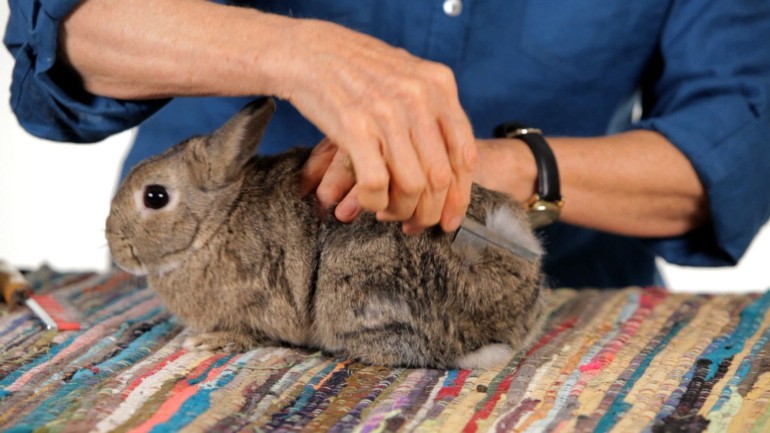
Brush your rabbit frequently. For short-haired rabbits, brushing a few times a week may be enough, but during shedding seasons you may need daily brushing. For long-haired breeds, daily brushing is usually necessary to prevent tangles and mats. Mats can pull on the skin, trap moisture, and lead to infections.
Hairballs are a serious concern. Rabbits cannot vomit like cats. If they swallow too much hair, it can form a blockage in the digestive system. Regular brushing reduces the amount of loose fur your rabbit swallows, which reduces the risk of gut stasis, a dangerous condition where the digestive system slows or stops.
Trim nails regularly. Overgrown nails can snag, break, and change how a rabbit walks. Most rabbits need nail trimming every 4 to 6 weeks, but it depends on activity level and surfaces. If you are unsure, ask a vet or an experienced groomer to show you how to do it safely.
Do not bathe rabbits unless a vet specifically tells you to. Baths can cause extreme stress, lower body temperature, and lead to shock. If your rabbit is dirty, use spot cleaning with a damp cloth or pet-safe wipes, and keep the rabbit warm and calm.
Check ears, eyes, and bottom area as part of grooming. Healthy ears are clean and not irritated. Eyes should be clear, without discharge. The bottom area should be clean and dry. If you see sticky droppings or dampness, it could indicate diet issues, dental problems, obesity, or illness, and should be checked by a rabbit-savvy vet.
Feeding your rabbit: the modern healthy diet
A rabbit’s diet is one of the most important factors for long-term health. The foundation of a healthy rabbit diet is hay. Hay supports digestion, prevents gut issues, and helps wear down teeth naturally, because rabbit teeth grow continuously throughout life.
Your rabbit should have unlimited access to fresh hay at all times. Timothy hay is a common choice for adult rabbits. For young rabbits, alfalfa hay is often used because it has more calcium and protein, but adult rabbits should not have too much alfalfa unless advised by a vet.
Fresh leafy vegetables should be offered daily. Good options include romaine lettuce, coriander, basil, mint, bok choy, capsicum, and various safe greens. Introduce new vegetables slowly to avoid stomach upset. Some vegetables like cabbage and broccoli can cause gas in some rabbits, so monitor your rabbit’s reaction and adjust accordingly.
Pellets can be included, but they should not be the main food. Choose a high-fibre pellet without colourful bits, seeds, or added sugar. The amount should be controlled based on your rabbit’s size and activity level.
Fruits such as apple, blueberry, and banana should be treats only, because they are high in sugar. Give small amounts a few times a week at most. Always remove seeds from fruits like apples.
Fresh water must always be available. Some rabbits prefer bowls over bottles because bowls are easier to drink from and encourage better hydration. Keep the water clean and change it daily.
Enrichment: toys, chewing needs, and exercise
Rabbits love to chew, dig, explore, and play. Chewing is not bad behaviour, it is natural and necessary to maintain healthy teeth. Provide safe chew items like untreated wooden blocks, apple sticks, compressed hay toys, and cardboard tubes.
Exercise is essential for physical and mental health. Rabbits should have several hours of safe movement daily, even if they have a large enclosure. Set up a rabbit-proofed area where your rabbit can hop, run, and explore. Use tunnels, boxes, and hideouts to encourage activity.
Mental stimulation is important too. Rabbits enjoy puzzle feeders, scattering pellets in a snuffle mat, and interactive play. Even simple games like gently rolling a ball or hiding herbs inside paper can keep your rabbit engaged.
Health care, vaccinations, and warning signs
Regular veterinary care is important. Rabbits need a vet who is experienced with rabbits, because rabbit health care is different from cat or dog care. Depending on your location, vaccinations may be recommended for diseases such as myxomatosis and rabbit haemorrhagic disease. Ask a rabbit-savvy vet what is needed in your area and follow the schedule.
Parasite prevention is also important. Fleas and mites can affect rabbits, especially if they have contact with other pets or go outdoors. Never use cat or dog flea treatments on rabbits unless a vet prescribes it, because many are toxic to rabbits.
Learn early warning signs. Rabbits hide illness well, so small changes matter. Watch for reduced appetite, fewer droppings, very small droppings, hiding more than usual, grinding teeth in pain, runny eyes, head tilting, drooling, or breathing difficulty. If your rabbit stops eating or stops passing droppings, treat it as an emergency and contact a vet immediately.
Building a strong bond with your rabbit
Rabbits thrive when they feel safe and understood. Build trust by sitting on the floor, letting your rabbit approach you, and offering gentle strokes on the forehead and cheeks. Avoid forcing cuddles. Many rabbits do not like being picked up, and that is normal. If you need to lift your rabbit, support the chest and hindquarters securely and keep it close to your body to prevent kicking injuries.
Daily interaction builds confidence. Talk softly, keep routines predictable, and respect your rabbit’s boundaries. With time, most rabbits become affectionate companions who enjoy attention, play, and relaxed time with their family.
Final thoughts
Caring for a rabbit is rewarding, but it comes with responsibility. A rabbit needs a safe and spacious home, a hay-based diet, daily enrichment, proper grooming, and regular veterinary care. When you meet these needs, rabbits become clean, entertaining, and emotionally connected pets who can bring warmth and joy to your home for many years.
