

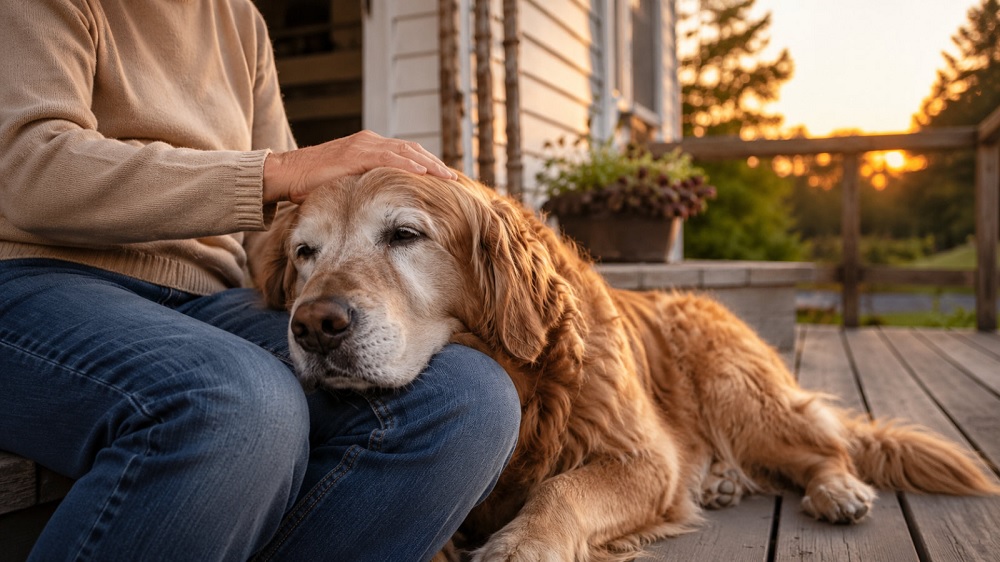
Many dog owners only become aware of their dog’s joint health due to subtle signs – shifting weight off one leg when standing, taking shorter walks, or lowering the speed while playing for instance. It’s easy to explain away subtleties with aging, but once they’re noticeable, the damage is done. The good news is that there are early signs of joint damage that are even subtler – gradual changes that indicate it’s time to step in and make sure the damage isn’t allowed to get worse.
Joint Problems Don’t Start Where You Think They Do
Hip and elbow dysplasia are good examples of this kind of snowball effect. They’re already causing damage years before it’s possible to tell anything is wrong just by looking at how the dog walks. We have, in other words, already lost the race against time to save the joint. It has been replaced by bad tissue and potentially bone on bone.
This degeneration is what causes the visible symptoms of arthritis – that grind and catch when the joint moves through its normal range of motion; the bones reacting to stress by building outgrowths at the margins of the joint to protect their surfaces, called osteophytes or bone spurs.
Overfeeding Puppies Causes Damage You Can’t Undo Later
One of the most common mistakes we see is well-meaning owners overfeeding large-breed puppies because they want them to “grow big and strong.” The problem is that skeletal growth and soft tissue development don’t happen at the same pace. Bones can grow rapidly under excess caloric intake, but the muscles, tendons, and ligaments that are supposed to stabilize those bones take longer to catch up.
The result is a mismatch. You get a skeleton that’s ahead of its supporting structure, and that mismatch shows up as joint laxity – a kind of looseness or instability in the hip or elbow that becomes permanent. Growth plates are especially vulnerable during this window. These are the soft, cartilage-rich zones at the ends of long bones where new bone tissue forms, and until they close (usually somewhere between 12 and 18 months depending on breed size), they’re far more prone to injury from awkward landings, repetitive impact, or excess body weight pressing down on joints that aren’t ready for it.
Feeding a large-breed puppy formula designed to slow growth rate slightly, rather than maximize it, is one of the simplest interventions available. It’s not about restricting a puppy’s food out of caution. It’s about matching caloric intake to what the skeleton can handle without outrunning the ligaments and muscles meant to protect it.
The Silent Phase: Why You Won’t See It Coming
Cartilage doesn’t have any nerve endings. This is the reason why so many joint problems develop without any visible signs. A dog could be losing a significant amount of the slick cartilage that covers a joint’s surface and not show any signs of pain because the deteriorating tissue cannot transmit pain signals.
On top of that, dogs are experts at hiding pain. This behavior stems from the need to survive, and has been passed down from their wild ancestors – appearing weak makes you an easy target, so dogs pretend everything is fine, adapt their movements slightly, and continue on their way. By the time a noticeable limp appears, a lot of cartilage from the joint has been lost and the synovial fluid inside the joint capsule (whose purpose is to facilitate smooth movements with minimum friction) starts to deteriorate, become thinner, and lose its protective properties.
This process is responsible for turning an unnoticed micro-injury or small joint instabilities in a young dog into full clinical osteoarthritis in dogs thousands of days later. One significant injury is rarely the cause. It usually takes thousands of small, repeated stresses on a joint that wasn’t structurally perfect in the first place, for the cartilage to be unable to regenerate itself.
Fat Isn’t Just Extra Weight On The Joints
We all understand that dogs carrying greater weight put more stress on their joints purely by forcing them to carry more weight with every step. But that’s merely 50% of the story, and arguably the less important 50% at that.
Adipose tissue is not inactive cushioning – it acts as a metabolically active endocrine organ, secreting a variety of signaling molecules into the bloodstream called adipokines. Many of these are pro-inflammatory. Those inflammatory molecules are coursing throughout the bloodstream, and yes, some of them end up in joint tissue, where they assist in targeting and breaking down cartilage. An overweight dog isn’t just physically disrupting their hips and knees more, their body is literally programmed to chemically degrade their joint tissue at a faster rate than a lean counterpart’s body would, even apart from the extra physical stress.
This is why Body Condition Score matters so much more than you might think. A proper BCS assessment allows you to estimate joint risk far more accurately than the dog’s scale weight alone does, simply by understanding that the dog with more fat on them is dealing with a low background level of inflammation constantly undermining their joints. Two dogs of the same weight and breed can have very different BCS results based on their muscle and fat percentages.
What Exercise Actually Helps, And What Quietly Causes Damage
Exercise is where good intentions go wrong most often. Owners want their dogs active and fit, which is the right instinct, but the type of activity matters as much as the amount.
Low-impact conditioning is the gold standard for building the kind of muscle that actually protects joints. Swimming is close to ideal because it builds strength without any concussive force on the joints at all. Controlled leash walking, especially on varied but soft terrain, does something similar at a gentler pace. These activities build the stabilizing muscle around a joint, which matters because strong muscles absorb force that would otherwise transfer directly into cartilage and bone.
High-impact activity is a different story, particularly for young dogs with open growth plates. Repetitive fetch on hard surfaces is one of the worst offenders – the same joint gets slammed with the same force over and over, dozens of times in a single session. Jumping from height, whether it’s off furniture or out of a vehicle, sends a shock through the front limbs that a young, still-developing joint isn’t built to absorb. None of this means dogs shouldn’t run or play. It means the surface, frequency, and intensity need to be matched to the dog’s stage of development.
Proprioception training deserves more attention than it usually gets. This is the dog’s ability to sense where its limbs are in space and adjust accordingly, and it’s trainable. Simple balance exercises, wobble boards, or varied walking surfaces introduced early help a dog land more precisely and avoid the awkward twists that cause micro-trauma. A dog with strong proprioception is simply less likely to take a bad step.
Reading The Signs Before There’s A Limp
Because cartilage doesn’t cause pain and dogs have a high pain threshold, it’s the little things that change first.
Like how your dog sits. Healthy dogs sit squarely because it’s comfortable to do so. Dogs beginning to feel joint discomfort sit off to one side, because it’s not. Lazy sitting (as it’s called) is easier on the joint that’s giving them fits.
Or the way your dog transitions from lying down to standing. A slight pause, a bit more effort, or a stiff, slow push up are indicative that something in the joint’s not quite right. Stairs are another clue. If your dog starts taking them one at a time instead of two, or hesitates before descending, your dog might be in pain. Reluctance to jump into the back of the car is also a common tip-off. So is waiting for you to hoist the front end before attempting the back end up. And taking more time to clear those jumps.
None of these signs are dramatic. That’s the point. They’re supposed to be subtle, because at this stage the joint damage is still in early and mostly reversible territory, not end-stage disease.
Starting Nutraceuticals Before The Joint Is Already Compromised
Glucosamine and chondroitin get talked about constantly in senior dog contexts, but their real value is arguably higher when they’re introduced during young adulthood, while the cartilage matrix is still largely intact. These amino sugars support the structural components of cartilage and may help slow the rate of breakdown when used consistently over the years, rather than being reached for only after damage is already significant.
Omega-3 fatty acids, specifically EPA and DHA from marine sources, work through a different mechanism. They help downregulate the inflammatory pathways that drive joint tissue breakdown, which matters given what we now know about how inflammation – whether from adipose tissue or from joint stress itself – accelerates cartilage loss.
There’s also a newer category worth knowing about: Disease-Modifying Osteoarthritis Drugs, or DMOADs. Unlike traditional pain medication that just masks discomfort, these are designed to actually slow the progression of joint disease at a biological level. They represent a shift toward treating joint disease the way we’d treat any other progressive condition, by intervening in the underlying process rather than just managing symptoms once they show up.
Make Orthopedic Checks A Routine Part Of Every Annual Visit
Most yearly vet trips concentrate on vaccines, weight, and overall wellness. Orthopedic evaluation often receives a quick once-over at most, and that’s a missed opportunity, especially in the first few years of a dog’s life when biomechanical issues are most fixable.
A baseline gait analysis, even a simple visual assessment of how a young dog moves and bears weight, provides you a reference point. If something changes two or three years later, having that baseline makes it far easier to spot. Biomechanics – how a dog’s individual structure distributes load through its limbs and spine – vary a fair amount even within the same breed, and catching a structural quirk early gives you time to adjust exercise, weight management, or supplementation before it becomes a big issue.
This is the partnership model that actually works: not waiting for a limp to trigger a vet visit but building joint health into the routine checkups that are already happening anyway.
Treat Joint Health Like Fitness, Not Damage Control
A young, seemingly healthy dog with no signs of trouble can still be years into a joint challenge that began with genetics, growth rate, or body weight. By the time you see a limp, you see a lot of damage and stress your dog can never fully overcome. Feed puppies for steady, slow growth. Feed adult dogs to be lean. Choose exercise that builds muscle without pounding joints.
And consider orthopedic checkups to be as routine as vaccinations from the start. Joint preservation isn’t a senior dog project. It’s something you do while your dog is still young enough for it to matter most.
