

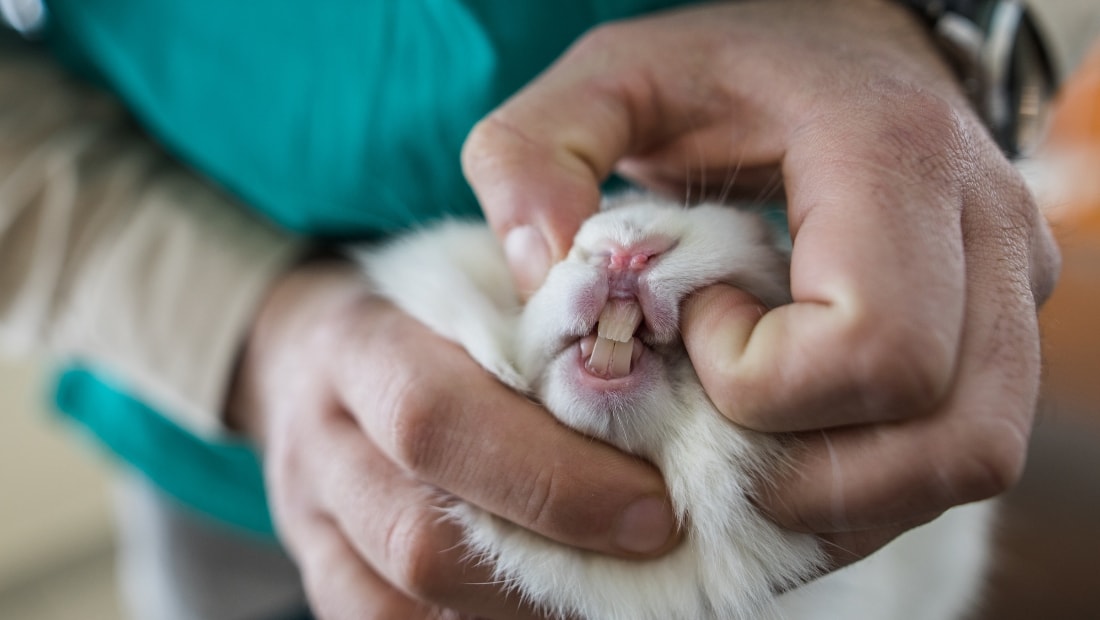
Watch a rabbit settle into an afternoon rest, and you will almost certainly witness the steady, rhythmic side-to-side motion of their jaws. It looks almost meditative, as though chewing were a hobby or a nervous tic. New rabbit guardians often assume that the massive pile of grass sitting in the enclosure is merely a dietary supplement, a cheap bedding filler, or an occasional snack to break up the monotony of commercial pellets and fresh parsley.
In reality, that fragrant pile of dried grass is the single most critical piece of medical preventative care a domestic rabbit will ever receive.
Rabbits possess one of the most uniquely specialized digestive and dental systems in the animal kingdom. While many companion animals visit the vet for routine cleanings or tartar removal, a rabbit faces a fundamentally different biological reality: their teeth never stop growing. Without the ceaseless, abrasive grinding provided by long-strand grass hay, a rabbit’s mouth transforms from an instrument of survival into a source of severe chronic pain and systemic illness.
The Engineering of the Rabbit Mouth: Teeth That Never Stop Growing
To understand why unlimited hay is mandatory, one must examine the evolutionary architecture of the lagomorph skull. Rabbits are elodonts, meaning their teeth are open-rooted and undergo continuous eruption throughout their entire lives.
A domestic rabbit has twenty-eight teeth: four upper incisors (including two tiny secondary teeth tucked directly behind the main front teeth, known as peg teeth), two lower incisors, and twenty-two cheek teeth split between premolars and molars nestled deep along the jawline. In a healthy adult rabbit, these teeth erupt at an astonishing rate of two to three millimeters per week. Over the course of a single year, an ordinary domestic rabbit produces several inches of new dental tissue across their incisors and molars.
In the wild, this rapid growth rate is a brilliant adaptation. Wild rabbits feed on coarse field grasses, bark, roots, and fibrous weeds embedded with soil and silica. If wild rabbits possessed closed-rooted teeth like humans or dogs, their teeth would wear down to the sensitive nerve roots before their second birthday, leading to starvation. Continuous growth ensures that fresh, viable tooth structure is always available to replace what is worn away.
In captivity, however, this survival mechanism becomes a liability the moment a human steps in with an unnatural diet. If the rate of physical wear does not match the rate of biological eruption, dental disaster is guaranteed.
The Mechanics of the Chew: Why Pellets and Treats Fail the Dental Test
A common misconception is that crunchy commercial foods—such as dry pellets, seed mixes, or hard wooden chews—are sufficient to wear down a rabbit’s teeth. Pet supply aisles are crowded with brightly colored packages claiming to “promote dental health” through hard-baked treats. Biologically, this claim misses the mark because it misunderstands the physical kinematics of the rabbit jaw.
Crushing Versus Grinding
When a rabbit consumes commercial pellets, dried seeds, or vegetables, they employ a simple vertical, crushing bite. The jaw moves straight up and down, shattering the food against the biting surfaces of the teeth. This vertical action creates minimal lateral friction and does very little to wear down the outer and inner margins of the tooth crowns. Furthermore, pellets break down into a fine paste almost instantly upon contact with saliva, requiring very few jaw cycles before swallowing.
Hay demands an entirely different biomechanical program. Because long strands of grass cannot simply be crushed, the rabbit must use an expansive, figure-eight lateral grinding motion. The lower jaw slides horizontally across the upper jaw, sweeping from side to side dozens of times per mouthful. This broad sweeping motion ensures that the entire occlusal surface of every molar and premolar rubs directly against its opposing partner.
The Hidden Sandpaper of Plant Silica
Beyond the physical movement of the jaw, hay carries an invisible abrasive agent: phytoliths. Phytoliths are microscopic, rigid structures of amorphous silicon dioxide that grass plants absorb from the soil and embed directly into their cellular walls.
When a rabbit grinds grass hay between their cheek teeth, they are not just rubbing bone against bone. They are effectively passing fine, natural sandpaper across the enamel. This combination of lateral grinding and silica friction evenly polishes away the microscopic peaks of growing tooth enamel, maintaining an immaculate, level chewing plane across the mouth.
What Happens When the Balance Breaks: The Silent Threat of Dental Disease
Rabbits are prey animals to their core. In the wild, displaying weakness, discomfort, or difficulty eating marks an individual as an effortless target for predators. Domestic rabbits retain this instinct completely, meaning they will suffer through excruciating dental deformities in silence, showing visible symptoms only when the condition has reached an advanced stage.
The Formation of Painful Dental Spurs
When a rabbit eats an insufficient volume of hay, the lateral grinding action is absent, and the teeth do not wear down evenly. Instead, the edges of the cheek teeth that miss direct contact continue their relentless upward eruption.
Over time, this unchecked growth forms razor-sharp enamel ridges known as dental spurs. Due to the angle of the jaw, lower molars almost always point their spurs inward toward the tongue, while upper molars project outward toward the cheeks. As the rabbit attempts to chew, these sharp hooks cut directly into the soft oral tissue with every bite. The tongue becomes lacerated, ulcers develop on the inner cheek pads, and the mouth becomes an agonizing environment of open sores and chronic inflammation.
Retrograde Root Elongation
The damage of overgrown teeth is not limited to what is visible inside the mouth. When the visible crowns of the teeth meet resistance because they are overgrown, the continuous pressure of eruption has nowhere to go. Unable to grow upward into the oral cavity, the teeth begin growing backward into the skull—a condition known as retrograde elongation.
The roots of the upper cheek teeth push upward into the nasal cavity, the tear ducts, and the bony orbits behind the eyes. This can cause chronic sinus infections, blocked nasolacrimal ducts resulting in weeping eyes, and dangerous retrobulbar abscesses that push the eyeball outward.
Simultaneously, the roots of the lower jaw teeth force their way downward, eventually piercing through the thin cortical bone of the lower jawline. Once bacteria invade these compromised root structures, deep mandibular bone infections take hold. These infections are notoriously difficult to treat, often requiring complex dental surgeries, root extractions, and lifelong veterinary management.
Recognizing the Subtle Clues of Dental Discomfort
Because rabbits hide their pain, observant care is necessary to catch dental degradation before it requires surgical intervention under anesthesia.
Watch closely for subtle shifts in appetite and eating mechanics:
-
Selective eating: A rabbit that suddenly stops eating coarse hay but eagerly consumes soft greens or pellets is often reacting to mouth pain. Chewing soft foods hurts significantly less than grinding tough stems.
-
Dropping food while chewing: If a rabbit picks up a piece of leafy green, begins chewing, and repeatedly drops half-masticated leaves from their mouth, tooth spurs are likely interfering with normal swallowing.
-
Drooling or wet chin: Often referred to as “the slobbers,” persistent moisture, matting, or fur loss under the chin and around the corners of the mouth is a classic indicator that mouth pain is preventing the rabbit from swallowing saliva naturally.
-
Facial asymmetry or weeping eyes: Swelling along the lower jawbone or clear-to-cloudy discharge spilling from one or both eyes often points directly to elongated tooth roots compressing internal skull pathways.
-
Altered fecal output: As dental pain slows down food intake, the delicate cecal fermentation system falters. Fecal pellets will become noticeably smaller, irregular in shape, dry, or significantly reduced in overall volume.
Building an Optimal Hay Environment in the Home
Preventing dental disaster is remarkably straightforward, but it requires human discipline and an environment designed to encourage nonstop foraging. As a fundamental dietary rule, grass hay should comprise at least eighty to eighty-five percent of an adult rabbit’s total daily food intake. Pellets should be restricted to a modest supplemental role, and fresh greens should serve as moisture-rich additions rather than primary staples.
Choosing the Right Hay
Not all hay offers the same dental benefits. For adult rabbits, coarse, long-strand grass hay is essential.
-
Timothy Hay: The undisputed gold standard for adult rabbits. Second-cut Timothy offers an ideal ratio of tender leaf and coarse, fibrous seed heads, while first-cut Timothy is exceptionally fibrous and abrasive, making it perfect for rabbits with a history of dental spikes.
-
Orchard Grass: A wonderfully soft, sweet alternative that provides excellent fiber for rabbits who are picky eaters or for human caretakers who suffer from severe Timothy hay allergies.
-
Meadow and Oat Hay: Excellent supplemental options that introduce varied textures and thick stalks that encourage diverse jaw angles during chewing.
-
The Alfalfa Exception: Alfalfa is a legume, not a grass. While essential for young, growing kits under six months old due to its high protein and calcium density, alfalfa must be avoided in healthy adult rabbits. Its rich nutrient profile quickly leads to obesity, urinary stones, and a refusal to eat coarser grass hay, accelerating dental decline.
Strategic Presentation to Encourage Natural Foraging
A rabbit should never run out of hay. The supply should be refreshed multiple times per day; rabbits rely heavily on their sense of smell, and hay that has been sitting out for twenty-four hours loses its enticing aroma and dries out.
Place heavy handfuls of fresh hay directly inside or immediately adjacent to your rabbit’s litter box. Rabbits are biologically wired to graze and eliminate at the exact same time. Housing a packed hay rack directly over the litter pan naturally doubles or triples the amount of time an animal spends grazing throughout the day.
You can also turn hay into an engaging activity rather than a stationary meal. Stuff cardboard toilet paper tubes, unbleached brown paper bags, or untreated willow balls with fragrant stems. Forcing your rabbit to tug, pull, and unravel tightly packed hay mimics the natural physical labor of foraging in the wild, engaging their neck muscles, wearing down their incisors through pulling, and grinding their cheek teeth through the resulting chew.
The Lifelong Commitment to the Grind
Domestic rabbits can comfortably live for ten to twelve years when given proper biological care. However, that longevity is entirely contingent upon oral health. An adult rabbit cannot maintain a functioning digestive system, stable body weight, or comfortable quality of life when their mouth is plagued by overgrown spurs, puncture wounds, and bone infections.
Throwing open a bag of hay and keeping those racks brimming with crisp, green stalks is not just routine maintenance. It is daily physical therapy for their jaw mechanics, an automatic dental file for ever-growing teeth, and the single best guarantee that your companion will remain healthy, happy, and pain-free for years to come.
