

The first hard freeze changes your property overnight. The soft paddock your horse galloped across in October becomes a field of iron-hard ruts, frozen hoofprints, and slick patches where water pooled and froze. Your horse still wants to move, buck, and play. Now every stride lands on ground that gives almost nothing back, and the jarring goes straight up the hoof into the bones and joints.
Winter doesn’t have to mean bruised soles, sore legs, or months of stall rest. If you understand what frozen ground does to the equine body, you can make a few changes that keep your horse sound until spring.
Why Frozen Ground Is Hard on Horses
Concussion Travels Upward
A healthy hoof works as a shock absorber. The frog, digital cushion, and hoof wall flex to soften each impact, and the ground normally takes some of that energy too. Frozen dirt behaves more like concrete. With less give underfoot, more concussive force moves through the coffin bone, pastern, and cannon bone with every step.
Uneven Footing Strains Joints and Ligaments
Frozen ruts and hoofprints make an uneven surface. Each step can twist the foot slightly, loading the collateral ligaments and joints unevenly. Horses that are already stiff, older, or recovering from injury feel this the most.
Sole Bruising and Abscesses
Hard, sharp frozen clods press into the sole. Thin-soled horses and those recently trimmed short are most likely to bruise, and deep bruises can turn into painful abscesses weeks later.
Freeze-Thaw Cycles Weaken Hoof Horn
In many regions, winter alternates between frozen ground and muddy thaws. Hooves that keep cycling between wet and dry can crack and chip, and moisture trapped in the frog’s crevices can lead to thrush.
How to Protect Your Horse’s Hooves This Winter
Keep up with trims. Hooves grow more slowly in cold weather, but they still need attention every six to eight weeks. Ask your farrier to leave a little extra sole depth for winter protection.
Rethink shoes. Shod horses on snow often collect “snowballs,” packed ice in the hoof that makes them walk on stilts. Snowball pads or rim pads help with this. Barefoot horses on frozen ground may benefit from hoof boots during turnout or riding.
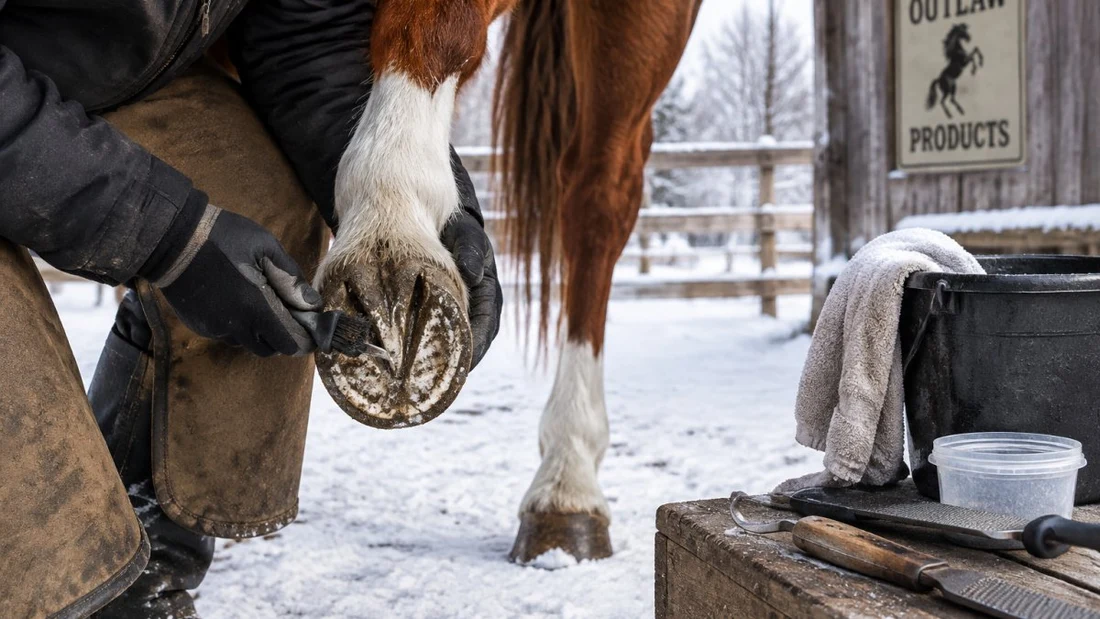
Pick feet daily. A daily check catches packed ice, stones, early thrush, and cracks before they become bigger problems.
Manage the footing. Put sand, wood shavings, or stall waste on high-traffic areas like gates and water troughs. Drag or harrow paddocks before a freeze when you can so the ground freezes more evenly.
How to Protect Your Horse’s Bones This Winter
Keep Your Horse Moving
It’s tempting to keep horses in their stalls until the ground softens, but bone needs exercise. Bone tissue remodels in response to load, and long confinement can weaken it over time. Daily controlled movement does a lot of good: hand-walking, turnout in a sanded dry lot, or riding in an arena with proper footing.
Warm Up Longer
Cold muscles, tendons, and ligaments are less elastic. Add 10–15 minutes of walking before asking for trot or canter. The extra time also gives synovial fluid a chance to circulate through the joints.
Feed for Strong Bones
Winter diets lean heavily on hay, and that has a nutritional cost. Fresh green pasture is a horse’s main natural source of vitamin K1, a nutrient that helps the body use calcium to build bone. Vitamin K1 breaks down as forage is cut, dried, and stored, so a horse on hay may get much less in winter than in summer.
Besides balanced calcium and phosphorus, good protein, and trace minerals like copper and zinc, many owners fill this seasonal gap with a supplement. A targeted vitamin K1 product such as the BoneKare bone supplement is one way to support bone health while pasture is dormant. Your veterinarian can help you decide what fits your horse’s full diet.
Don’t Forget Hoof Nutrition
Hoof horn depends on what the horse eats. Biotin, methionine, zinc, and quality protein all support strong hoof walls. Because hooves grow slowly, today’s nutrition shows up in the hoof several months from now, so winter feeding affects how your horse’s feet look next spring.
Signs Your Horse Is Struggling on Frozen Ground
Call your veterinarian or farrier if you notice:
- Short, choppy, or “walking on eggshells” strides
- Reluctance to leave the barn or cross certain areas
- Heat in the hoof or a strong digital pulse
- Shifting weight between front feet while standing
- Sudden lameness, which may point to an abscess or bruise
- Swelling in the lower legs
Frequently Asked Questions
Is it safe to turn horses out on frozen ground? Usually yes, with precautions. Smooth frozen ground is far safer than deep ruts or ice. Sand slick areas, give a smaller dry-lot turnout when footing is poor, and watch for signs of soreness.
Should I ride my horse on frozen ground? Light work at the walk is generally fine on smooth frozen ground. Save faster work for an arena or other ground with forgiving footing.
Do horses need more bone support in winter? Horses on hay-based diets get less of some nutrients that fresh grass supplies naturally, including vitamin K1. Less movement also means less of the bone-building load that daily activity provides.
Are barefoot or shod horses better on frozen ground? Each has trade-offs. Barefoot horses avoid snowballing but may bruise on hard, sharp ground. Shod horses have more protection but may need pads to prevent ice buildup. Your farrier can help you choose based on your horse’s feet and workload.
Frozen ground increases concussion, causes bruising, and tends to reduce movement, all of which make winter hard on bones and hooves. Your best defenses are regular farrier care, smarter footing, steady exercise, and a diet that makes up for what dormant pasture can’t provide. With those in place, your horse should come into spring sound and strong.
