

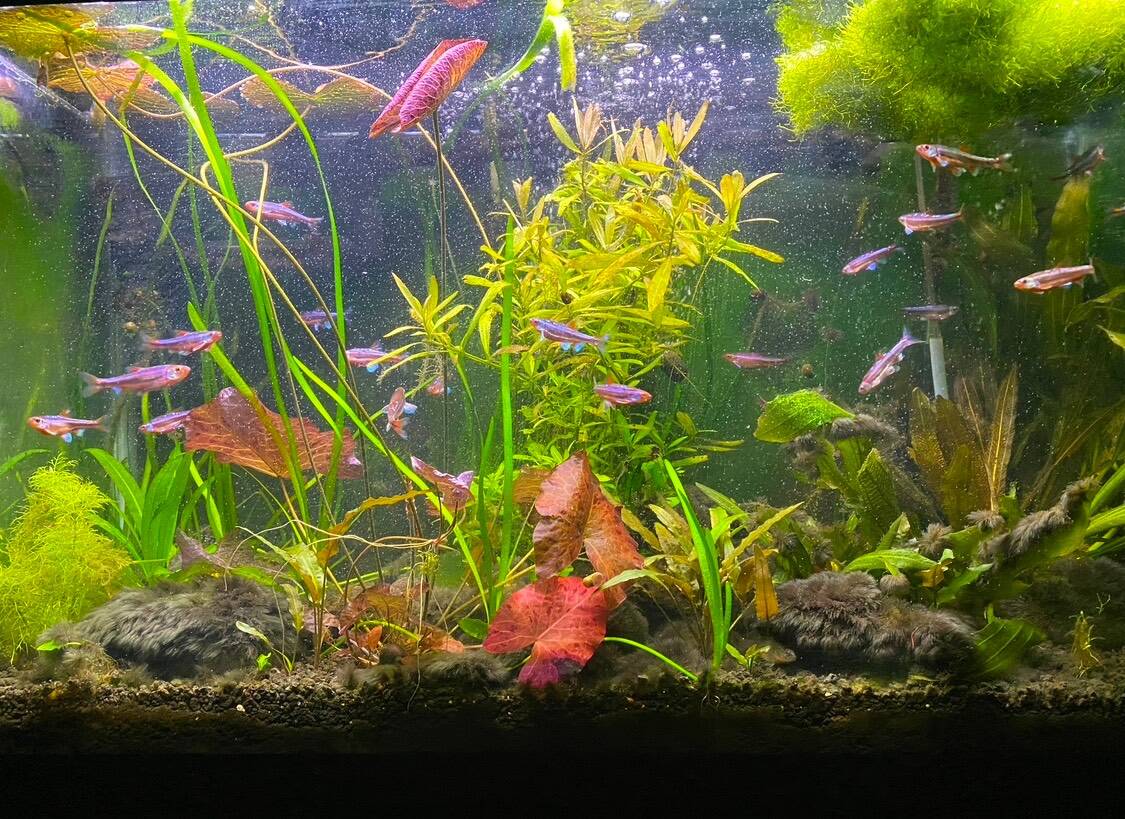
It begins as an unassuming, velvety shadow along the scalloped margin of a prized Anubias leaf or across the textured curve of driftwood. Within weeks, those discreet dark smudges erupt into dense, bristling carpets of coarse, charcoal-colored tufts that cling to filter nozzles, coat heater casings, and choke out delicate plant stems. This is Black Beard Algae (BBA), widely regarded by freshwater aquarists as the most persistent, demoralizing scourge in the planted aquarium hobby.
Unlike soft green dust algae or flimsy hair algae that can be scraped away with a magnetic glass cleaner or vacuumed up during a routine water change, Black Beard Algae behaves more like an entrenched invasive organism. It anchors into surfaces with cement-like tenacity, repels most conventional cleanup crews, and stubbornly survives conditions that would kill fragile aquarium flora.
Yet, as indestructible as it appears, Black Beard Algae is not invincible. It is an environmental symptom—a loud, visible indicator that key physical and chemical balances inside your tank have broken down. By diagnosing the systemic flaws feeding its growth and executing a precise, multi-stage remediation plan, you can eradicate this stubborn pest and reclaim the pristine aesthetic of your aquascape.
What Makes Black Beard Algae So Formidable?
To beat an adversary, you have to appreciate its biology. Despite its dark grey, charcoal, or deep olive-black hue, Black Beard Algae belongs to the group Rhodophyta—the red algae family. Its distinctive dark coloration is an optical illusion created by high concentrations of accessory pigments called phycobilins, which mask its underlying chlorophyll. If you pluck a tuft of BBA and drop it into a dish of rubbing alcohol or hydrogen peroxide, the water quickly bleeds a startling, vibrant pinkish-red as those dominant pigments degrade.
This classification explains several of BBA’s most frustrating characteristics:
-
Cellular anchoring: BBA produces specialized basal holdfast cells that bore microscopic root-like structures into the porous surfaces of driftwood, lava rock, and plant tissue. You cannot simply rub it off with your fingers; pulling a tuft directly from a live leaf usually tears the leaf in half before the algae lets go.
-
Unpalatable texture: Most herbivorous fish and invertebrates ignore it entirely. Its cellular walls are packed with complex, fibrous structural polysaccharides that give the tufts a tough, rubbery, wire-like consistency that is nearly impossible for small fish to chew or digest.
-
Broad environmental tolerance: Red algae thrive under an expansive spectrum of lighting conditions, adapting effortlessly from dim, shaded corners of low-tech tanks to the intensely illuminated substrates of high-tech aquascapes.
Identifying the Root Causes: Why BBA Conquered Your Tank
Scrubbing away visible tufts without addressing water chemistry is an exercise in futility. BBA reproduces via microscopic spores that drift through the water column, waiting for specific environmental triggers to take hold. If the underlying triggers remain active, the algae will return with increased vigor within days of manual removal.
The Carbon Dioxide Rollercoaster
The primary catalyst for Black Beard Algae outbreaks in planted aquariums is unstable or insufficient dissolved carbon dioxide (CO2).
In low-tech aquariums without pressurized CO2 injection, natural carbon dioxide levels are low but relatively stable, hovering around two to three parts per million (ppm). In pressurized, high-tech tanks, aquarists push levels up to twenty-five to thirty-five ppm. BBA does not necessarily demand high CO2 or low CO2 to thrive; what it exploits is fluctuation.
When carbon dioxide levels swing wildly between day and night—or crash mid-afternoon due to poor gas diffusion, inadequate surface agitation, or an empty pressurized cylinder—higher plants stall. Aquatic plants require a continuous, predictable carbon source to power photosynthesis. When carbon suddenly vanishes while high-output lights remain blazing, plant metabolism screeches to a halt. In this stalled state, plants leak sugars, amino acids, and iron back into the water column. BBA, possessing a far more adaptable carbon-scavenging enzyme system, feasts on these leaked nutrients and capitalizes on the plants’ metabolic arrest.
High Organic Waste and Accumulated Mulm
While dissolved nitrogen and phosphorus get the blame for most algae blooms, BBA is uniquely stimulated by dissolved organic compounds (DOCs) and decaying particulate matter.
Tanks plagued by heavy fish loads, infrequent water changes, decaying plant debris, or neglected canister filters create a nutrient-dense stew of decomposing organics. Fine particles of mulm settle directly into the bristles of existing algae tufts, creating a self-sustaining micro-nursery that supplies the organism with localized food. If you notice BBA clustering primarily along the substrate line, around filter intakes, or behind hardscape where detritus settles, excessive organic loading is almost certainly fueling the fire.
Flow and Light Disconnect
Take a close look at where BBA first colonizes in an aquarium. In nine out of ten setups, the earliest patches appear directly on filter outflow pipes, lily pipes, or the edges of slow-growing plants situated in the direct current of a powerhead.
BBA has a high affinity for rapid water movement. Fast current acts as an uninterrupted delivery mechanism, sweeping dissolved organics, micronutrients, and carbon past its filaments at high speed. When strong water flow intersects with intense, unshaded illumination, it creates the ultimate incubator for red algae colonization.
Active Eradication: The Tactical Arsenal
Correcting your tank’s underlying parameters will stop BBA from spreading, but existing, mature colonies rarely disintegrate on their own. They must be systematically killed off using targeted, deliberate chemical interventions.
Spot Treating with Hydrogen Peroxide (H2O2)
Standard three-percent household hydrogen peroxide is one of the most effective, economical weapons against BBA. When H2O2 comes into direct contact with the algae, its strong oxidizing properties rupture the fragile cell membranes of the filaments. Within minutes, the peroxide breaks down safely into pure water and oxygen, leaving no toxic chemical residue in your aquarium.
-
Turn off all filters, wavemakers, and powerheads. The water column must be completely still so the peroxide does not blow away from the target area.
-
Draw standard three-percent H2O2 into a plastic syringe or dosing pipette. Calculate your maximum safe dose: use no more than one and a half to two milliliters of three-percent peroxide per gallon of total tank volume during a single twenty-four-hour period to protect sensitive livestock.
-
Slowly submerge the syringe and discharge the peroxide directly onto the base of the BBA tufts, keeping the tip of the syringe mere millimeters from the algae.
-
You will see immediate, vigorous bubbling as the peroxide oxidizes the cellular walls and releases oxygen gas.
-
Allow the water to remain completely still for fifteen to twenty minutes, giving the peroxide adequate contact time to destroy the algae’s cellular integrity.
-
Turn your filtration back on to restore circulation.
Within twenty-four to forty-eight hours, the treated BBA will lose its dark pigmentation, shifting to an unmistakable pale pink, fiery red, or ghostly white. This color change confirms that the algae is dead.
The Liquid Carbon Strike
Liquid carbon additives based on glutaraldehyde or similar polycycloglutaracetal formulations act as potent algaecides against red algae. While marketed primarily as plant carbon supplements, their actual physiological benefit to plants is minor compared to their exceptional ability to disrupt algae cell walls.
You can apply liquid carbon using the same spot-treatment syringe technique outlined for hydrogen peroxide. Keep daily dosages strictly within the manufacturer’s recommended daily parameters, as glutaraldehyde can deplete dissolved oxygen levels and harm sensitive scaleless fish, freshwater shrimp, and specific delicate plant families like Vallisneria and liverworts.
For severe, system-wide infestations, many aquarists find success by alternating days: spot-treating with hydrogen peroxide on day one, followed by a targeted dose of liquid carbon on day two, paired with a standard fifty-percent weekly water change to flush out organic byproducts.
Outside-the-Tank Baths for Hardscape and Epiphytes
If your BBA has overrun portable items like porous lava stones, driftwood, or hardy epiphytic plants (Anubias, Bucephalandra, Java Fern), treating them outside the aquarium offers far greater potency without risking sensitive tank inhabitants.
-
The Peroxide Soak: Prepare a shallow plastic tub filled with a mixture of four parts aquarium water to one part three-percent hydrogen peroxide. Submerge the affected plants completely for three to four minutes. Rinse them thoroughly in clean dechlorinated water before returning them to the tank.
-
The Bleach Dip (Hardscape Only): For rocks and synthetic equipment, prepare a one-to-twenty dilution of standard unscented household bleach and tap water. Submerge the infected hardscape for ten minutes, which completely dissolves the algae. Afterward, soak the items in water treated with a heavy, triple-dose of aquarium dechlorinator until all traces of chlorine scent vanish. Never use bleach on delicate, soft-stemmed plants.
Enlisting Biological Reinforcements
Relying on livestock alone to cure a catastrophic BBA infestation will lead to disappointment. However, once you have softened the algae’s defenses with spot treatments, introducing the right biological allies can wipe out the remaining remnants and prevent future spore establishment.
The True Siamese Algae Eater
The Siamese Algae Eater (Crossocheilus oblongus) is one of the few fish species verified to consume Black Beard Algae. However, caution is required when sourcing this fish.
Unscrupulous or uninformed pet stores frequently mislabel the Chinese Algae Eater (Gyrinocheilus aymonieri) or the Flying Fox (Epalzeorhynchos kalopterus) as Siamese Algae Eaters. These look-alikes do not eat BBA; as they mature, they become aggressive, territorial, and disruptive toward tank mates.
A true Siamese Algae Eater features a distinct, jagged black horizontal stripe that runs continuously from its nose, straight through the eye, and completely across the clear caudal tail fin. Furthermore, they lack the prominent colored mouth barbels of the Flying Fox. When kept in suitable environments, young SAEs will actively graze on soft, young BBA tufts. Keep in mind that as they grow larger, they often develop a preference for easy commercial flake food, making them far less enthusiastic algae grazers in heavily fed community tanks.
Amano Shrimp
Adult Amano Shrimp (Caridina multidentata) are voracious detritivores. While their small, delicate mouth appendages cannot tear through mature, rubbery BBA filaments, they are extraordinarily effective when paired with spot treatments.
Once BBA has been treated with hydrogen peroxide or liquid carbon, its cell walls break down and turn soft and pink. To an Amano shrimp, this dead and dying matter becomes an irresistible, easily harvested feast. A team of ten to twenty Amano shrimp in a standard community tank can strip an entire forest of dying, pink BBA down to bare wood within forty-eight hours.
Long-Term Maintenance: Preventing the Next Siege
Eradication is only half the battle. If your regular maintenance routine does not change, BBA will inevitably creep back into the aquarium. Sustainable victory requires establishing long-term environmental stability.
The Strategy of Ruthless Pruning
Aquarists often hesitate to cut off damaged leaves, hoping that a sick plant will miraculously heal. Leaves do not heal. A slow-growing Anubias or Cryptocoryne leaf that is seventy percent covered in BBA is an active liability. It can no longer photosynthesize effectively, and it continuously leaks organic compounds that sustain the colony.
Take sharp aquascaping scissors and cut heavily infected leaves off cleanly at the base of the petiole. Removing the most compromised foliage immediately removes substantial BBA biomass from the tank, allowing the plant to redirect its energy toward pushing out clean, vigorous, algae-resistant new shoots.
Deep Cleaning the Filtration System
Your filter should be a biological haven, not a reservoir of rotting sludge. If it has been months since you rinsed your mechanical media, your filter is pumping massive concentrations of dissolved organic compounds right across your aquatic plants.
Every two to four weeks, rinse your mechanical filter sponges and ceramic biomedia gently in a bucket of siphon-drained tank water (never tap water, which destroys beneficial nitrifying bacteria). Vacuum out the sludgy brown accumulation resting at the bottom of the canister or power filter basin. Clean the inside walls of your filter tubing using a long, flexible pipe brush; decaying biofilm lining your outflow pipes provides a steady stream of micro-nutrients that feeds BBA right at the nozzle opening.
Balancing the Light-to-Nutrient Ratio
If you run high-intensity lighting for ten or twelve hours a day without pressurized CO2 or consistent fertilizer dosing, you are effectively providing an open invitation for algae.
-
Scale back your lighting photoperiod to a modest six to seven hours per day while stabilizing your tank.
-
If your LED light fixture features a dimmer, reduce overall intensity by twenty to thirty percent.
-
Ensure that direct sunlight from nearby household windows is not striking the aquarium during peak daytime hours.
-
Maintain a disciplined, weekly water change schedule—swapping out thirty to fifty percent of total water volume—to continuously reset nutrient thresholds and purge dissolved organic waste.
Defeating Black Beard Algae does not require mysterious additives or extreme, scorched-earth resets. It demands patience, biological precision, and a willingness to inspect your tank’s daily inputs with an honest eye. By shutting down organic waste, stabilizing carbon dynamics, and methodically treating existing colonies, you can transform your aquarium back into the vibrant, crystal-clear aquatic world it was intended to be.
